The Hidden Cost of Code: How to Build Energy-Efficient CI/CD Pipelines
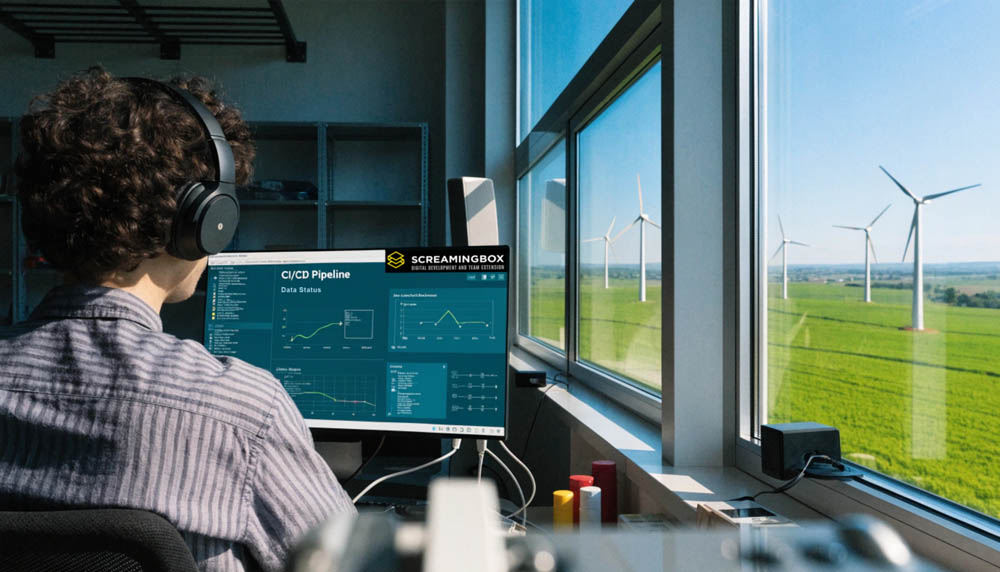
Consider a developer making a minor code adjustment. The pipeline is roused from its slumber and to work: tests are put through their paces, containers are built, dependencies come down, artifacts are packaged and security scans run before the deployment goes out.
Now have someone alter a single line of CSS. It all starts over.
You will not find a smokestack on any CI/CD pipeline, nor a carbon meter in the corner of your screen to pass quiet judgment on the build. Yet the energy use is no less real.
Every server running a test suite, every virtual machine at work on some compilation, every container image that is stored is an electricity consumer. Multiply that by the thousands of pipelines a development team puts through the system in a month and the costs mount up.
For a business intent on lessening its environmental footprint, software delivery has become a key area of focus. One does not stop testing or deploying in the name of efficiency; that would be an odd way to conduct a technology business.
The more pertinent question is how to get code delivered without squandering energy in the process.
Why CI/CD Has an Energy Problem
There is no denying that continuous integration and deployment have changed the game. The ability to build, test and release on a continuous basis, rather than waiting months for a change to go live, is invaluable for keeping up with customers and competition.
Speed, however, can be wasteful. An inefficient pipeline will see expensive jobs run for no reason. A test suite may rebuild an entire app for the sake of a small component. Build servers sit idle between tasks but still draw resources. And then you have scale.
One poorly run pipeline is hardly worth noting, but across hundreds of developers and thousands of daily builds it is another matter entirely. It is the digital version of leaving the office lights on, and it happens around the clock.
Software efficiency is not just a matter of execution time or what is being spent in the cloud; energy is an operational metric that must be acknowledged.
Measuring the Carbon Footprint of Software Delivery
Sustainable DevOps is subject to the old adage that you cannot reduce what you do not measure. But figuring out the carbon footprint of a pipeline is not as easy as glancing at a dashboard figure. It comes down to the compute resources, the length of time they are in use, the data center’s own efficiency and the carbon intensity of the power grid.
A workable approach is to look at some fundamentals:
- Compute time for the CPU and memory during builds and scans.
- Pipeline frequency, to see how often workflows are being triggered needlessly.
- Resource utilization on the build machines.
- The carbon profile of the chosen cloud region.
- The volume of artifact and storage activity.
Do not wait for a perfect calculation to begin; that is a sure way to make no progress at all. Start with proxies like CPU-hours or build duration and factor in emissions data from the cloud provider for a fair estimate.
The aim is to have visibility. If one test pipeline is found to be using ten times the compute of another for a like application, the inefficiency is plain to see and represents an opportunity, regardless of the precise emissions tally.
Optimize the Pipeline Before Buying More Compute

The reflex when a pipeline drags is to throw more machines at the problem. That might solve the speed issue, but it can also make an already inefficient and energy-heavy process costlier. A better course of action is to optimize first.
Run Only What Is Necessary
Unnecessary work is a major contributor to waste in CI/CD. A simple update to the documentation hardly warrants running the whole backend test suite, and altering one service in a sizeable monorepo should not mean you have to rebuild them all.
Today’s pipelines are capable of being much more discerning. With path-based triggers, dependency graphs and intelligent test selection, it is possible to constrain the scope of any given build.
The point is not to forgo important tests but to run the appropriate ones at the right moment. One might see a team put fast unit tests on every commit, reserve targeted integration tests for the services in question, and leave the full regression suite for a release candidate or scheduled build. The specifics will vary with the application, but the idea is to be smart about it rather than testing everything without discrimination.
Be Cautious With Your Cashing
There is no denying that compiling and installing dependencies can be heavy on compute and time. Good caching is the antidote. Most CI platforms and build systems have the means to cache compiled artifacts, intermediate outputs and dependencies so as not to do work twice.
Yet efficiency does not come by default. A badly thought out cache strategy has its own overhead; large caches that are constantly being invalidated, rebuilt and moved around are counterproductive.
It is better to be selective and cache the stable, expensive operations. Do not go to the trouble of shuffling vast quantities of data to put back a few seconds of computation.
Some Restraint in Parallelism
You can cut wall-clock time in half with parallel jobs, but putting ten machines to work at once does not equate to less energy use than a single machine working in sequence. In some cases it is the opposite.
The issue is not only how quickly the pipeline can be done, but what the total compute cost of the workflow is. Where a build is critical to the business, the extra resources may be justified. For the routine stuff, a more measured approach is called for. Sustainable CI/CD demands that teams look at both elapsed time and resource consumption.
A Smaller and Smarter Build
If one wants to lower the energy cost of software delivery, there is no more direct route than build efficiency. A lean application takes less time to package, scan and deploy. The same holds true for containers; a lightweight image is preferable to a bloated one rife with superfluous tools. This is where DevOps and sustainable coding intersect.
Take for instance your dependencies. Each one is potential work: more packages to install, larger build contexts and more complex resolution. We are not suggesting developers eschew good libraries or reinvent the wheel, which would be an engineering disaster of another sort. But a periodic review to cull what is unused or duplicated is wise. Tools are available to spot this technical clutter. The payoff is not just in sustainability but in better security and quicker builds.
Incremental Builds
Why start from scratch when the build system can reuse work from the last run? Incremental compilation is key for monorepos and other large applications. If the tooling can tell what has been affected by a minor change, there is no reason to force a rebuild of every component. Systems with remote caching and dependency-aware execution will spare you a lot of repeated computation, giving developers faster feedback while keeping infrastructure costs down.
Keep Containers Lean
It is easy to think of container images as mere packaging, but their footprint is felt across the delivery chain. A big image is slow to pull, store and scan. Multiply that over a large number of deployments and the overhead adds up.
Using minimal base images, stripping out development tools from production and making use of multi-stage builds are ways to keep the artifact small and moving. It is a modest decision for an engineer, but the effect compounds.
Automate Compliance in the CI/CD Pipeline
When it comes to the CI/CD pipeline, one might not immediately think of compliance automation in terms of energy. Yet the two are inextricably linked by the amount of work the pipeline has to put in. Left to manual intervention and ad‑hoc reviews, or hampered by uneven security gates, the process is prone to the kind of inefficiency that leads to superfluous rebuilds and reprocessing.
The solution is to codify your rules. Whether it is a matter of container hardening or dependency policy, making compliance deterministic means violations are identified at the outset. Automated guardrails will stop any non‑compliant artifacts in their tracks, which in turn curtails the volume of redundant jobs and failed deployments. In the end, you have a delivery system with a more robust security posture and an energy footprint for the workflow that has been pared down by doing away with computation that was never necessary.
Cloud Infrastructure and Carbon Awareness

Where your computing infrastructure is physically located is not a trivial detail. Cloud regions are not all the same when it comes to the electricity that powers them; some have a much heavier reliance on fossil fuels, others on low-carbon or renewable sources. Then there is the matter of carbon intensity, which can fluctuate with the time of day and the state of the grid.
For a global organization, this makes region selection an element of sustainability strategy. It is not as simple as shifting every CI/CD job to the area with the best carbon numbers. One has to account for data sovereignty, cost, latency and compliance. A firm in financial services, for instance, will have constraints that do not allow workloads to be moved about at will. Yet, where the technical and regulatory environment is permissive, placing workloads with an eye on carbon can cut emissions.
We are seeing some companies try their hand at carbon-aware scheduling. A nightly test suite is more amenable to being run when the power is cleaner than a live production deployment for customers. There is a difference between the two, and it is one worth making. Not every workload has to be in the same place, nor does it need to run right now.
Better Operational Decisions for Sustainable CI/CD
There is a tendency among technology teams to cede sustainability to the corporate responsibility department as if it were a separate project. That is a mistake. The individuals who put together the pipelines are in the best position to curtail resource use. DevOps knows the build frequency, developers the test architecture, platform engineers how the infrastructure is being used and security the scanning workloads. Each has a piece of the energy puzzle.
A sound program of sustainable software will put those viewpoints to work on some basic questions:
- Is the pipeline expending effort for no reason?
- Do the most costly jobs deliver commensurate value?
- Can we make do with smaller compute resources?
- Are we leaving infrastructure on when we don’t need it?
- And can we track emissions as an engineering metric?
The latter is key. You already have your finger on the pulse of cloud costs, failure rates and deployment frequency. Put resource consumption in that mix and you get a fuller picture of performance. After all, what is measured is what ends up in the decision-making process.
Developers and Energy-Efficient Software
It is not just an issue of infrastructure. The code itself dictates the system’s workload. An algorithm that is poorly optimized, or too many database and network queries, will drive up computational demand. In the course of development the effect is hard to see; a few milliseconds on a local test don’t seem to count. But put an application in front of millions of requests and the inefficiency becomes apparent.
Sustainable coding has to factor in resource efficiency as well as security and function. It could be a matter of avoiding superfluous API calls or ensuring systems do not rouse compute resources without cause. The same applies to testing. While a test environment must give you confidence, it does not have to be a mirror of production for every commit.
Some judgment is called for. Sustainability is seldom the result of a single sweeping technical move. More often it is the sum of hundreds of sensible choices made over time.
Build a Culture of Sustainable Software Delivery
You can have all the tools in the world, but they will not fix the issue on their own. A firm may put in place carbon dashboards and efficient build systems or even optimize its cloud regions. Yet if an engineering team’s sole metric for success is to ship more features at speed, sustainability will be treated as an afterthought.
The best organizations are those that tie sustainability into what engineers are already focused on. There is a strong business case to be made: energy-efficient pipelines bring down cloud bills, leaner container images cut security risk, and smaller builds make for a more productive developer experience. In this way, sustainability is not another project vying for scarce resources; it is a means of bettering software operations with less environmental impact.
Some training is called for as well. Developers do not have to be environmental scientists, but they should understand how the choices they make affect infrastructure. An internal rule of thumb works well: before committing to more compute, see if the workflow can be done with less. One has to ask the question to find out how much waste is there.
A Practical Roadmap for Greener CI/CD
There is no need to tear down and redesign the whole development platform to get started. A phased plan is far more sensible.
Phase One is about setting a baseline. Put some numbers to your pipeline duration, data transfer, storage and compute consumption. Look at which workflows are the heaviest or most frequent so you can spot the low-hanging fruit.
Phase Two, take out the obvious inefficiencies. You can shut off idle environments, cull unused dependencies, improve your caching and get rid of redundant triggers. These are low-risk moves for a quick win.
Phase Three you are ready to optimize the architecture. This is where you might look at incremental builds, smarter test selection or even carbon-aware scheduling.
Phase Four, track it. You want to see the improvements over time by watching resource use in tandem with your normal DevOps figures. What you measure will depend on the situation, but useful metrics could be:
- The size of a container image
- The percentage of jobs making use of a cache
- Number of canceled executions
- Average energy or emissions estimate per deployment
- Build minutes per successful release
The point is to have something measurable, not to put together an elaborate report.
Conclusion

For years the industry has been bent on making things go faster. Now there is a chance to be more efficient in the wider sense. Not every build has to be a big one, nor does every test have to run on every system. A cloud resource should not be left running just in case it is needed down the line.
Consider that a more judicious approach to testing saves on computation, while a well-cached process avoids doing the same work twice. Better code will require fewer resources to run long after it has been deployed. Energy-efficient CI/CD is not a brake on innovation; it is simply a matter of clearing away the waste between the developer and the end user.
Any technology organization would be wise to follow a straightforward path: measure the pipeline, zero in on the activities that eat up the most resources and optimize them. Once the code is in the cloud it is out of sight, but the energy cost is very much in evidence. As delivery scales, efficient engineering will come to mean more than just a lower bill and a quicker build. It will mean making software that accomplishes more with less.
For more information about DevOps, Green IT, AIOps and how to have cost effective and sustainable DevOps for your digital development projects, please feel free to contact ScreamingBox.